 Listicle
AI Tools for Wedding Floral Design: 8 Platforms Ranked
Table of Contents
- How AI Tools Transform Wedding Floral Design
- Quick Comparison Table: AI Floral Design Platforms
- Eventscape: Photorealistic Visualizations for Luxury Events
- Creating a Wedding Mood Board With AI Tools
- Floral Proposal Software: Automating Design and Pricing
- AI-Generated Floral Arrangements: From Concept to Client Brief
- Choosing the Right AI Tool: Key Evaluation Criteria
- Common Pitfalls and How to Avoid Them
- Frequently Asked Questions
Last Updated: August 29, 2026
How AI Tools Transform Wedding Floral Design
The floral design industry is at an inflection point. Wedding planners and florists now have access to AI tools that generate photorealistic floral arrangements with pricing and vendor briefs in minutes instead of days. But not all AI tools for wedding floral design are equal. Some excel at visualization; others automate pricing. This guide breaks down what's real, what's hype, and which platforms actually save time.
Quick Comparison Table: AI Floral Design Platforms
| Platform | Best For | Key Strength | Learning Curve |
|---|---|---|---|
| Eventscape | Luxury event visualization | Photorealistic full-room renderings in 1-3 minutes | Minimal |
| Lobiloo AI Design Studio | Florist proposal automation | AI-generated bouquet recipes with florist's own pricing | Moderate |
| Fiory.AI | Wedding florist workflows | Branded proposals + Pinterest image analysis | Moderate |
| Curate | Florist business management | COGS tracking + rental inventory alongside proposals | Steep |
| flwrsAI | Quick arrangement inspiration | Free, 200+ flower varieties, instant concepts | Minimal |
| ItsaYes | Couple mood boarding | Free wedding mood board generation | Minimal |
| WeddingThemeAI | Detailed mood boards | Pantone color matching + vendor-ready PDFs | Minimal |
| Floral AI (iPhone) | Mobile brainstorming | Simple, on-the-go design sketching | Minimal |
Eventscape: Photorealistic Visualizations for Luxury Events
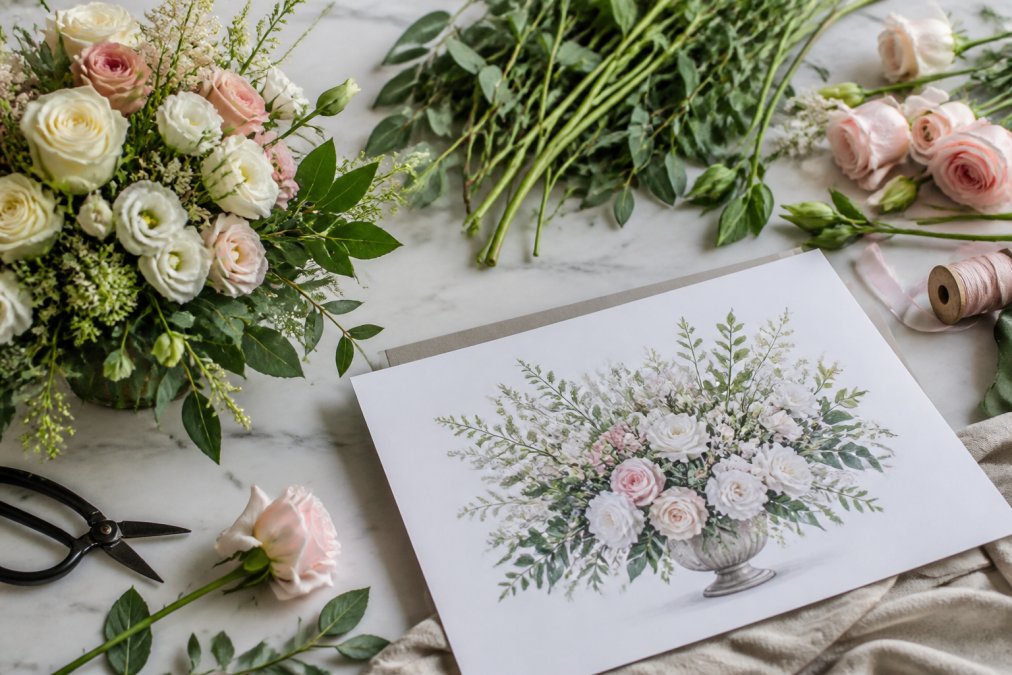
Eventscape is purpose-built for the luxury event planning market. Type a single sentence like "Art Deco centerpieces with blush roses, gold accents, and candlelight on marble tables," and the platform generates four photorealistic views: a full tablescape, room ambiance, centerpiece close-up, and place setting detail.
Eventscape generates an itemized Designer Brief with every visualization, listing every floral element, stem count, color specifications, and estimated quantities. Your florist gets a concrete blueprint instead of a vague reference image. The workflow is straightforward: describe your vision, review the four perspectives, request revisions via text prompts, and share a PIN-protected client approval link.

For boutique firms managing multiple high-touch clients simultaneously, this cuts proposal turnaround from days to hours (peer-reviewed research). One honest limitation: the visualizations are for aesthetic alignment, not production blueprints. A florist might interpret stem thickness or bloom density differently than the AI rendered it. The Designer Brief translates visual concepts into actionable specifications your vendor can work from.
Creating a Wedding Mood Board With AI Tools
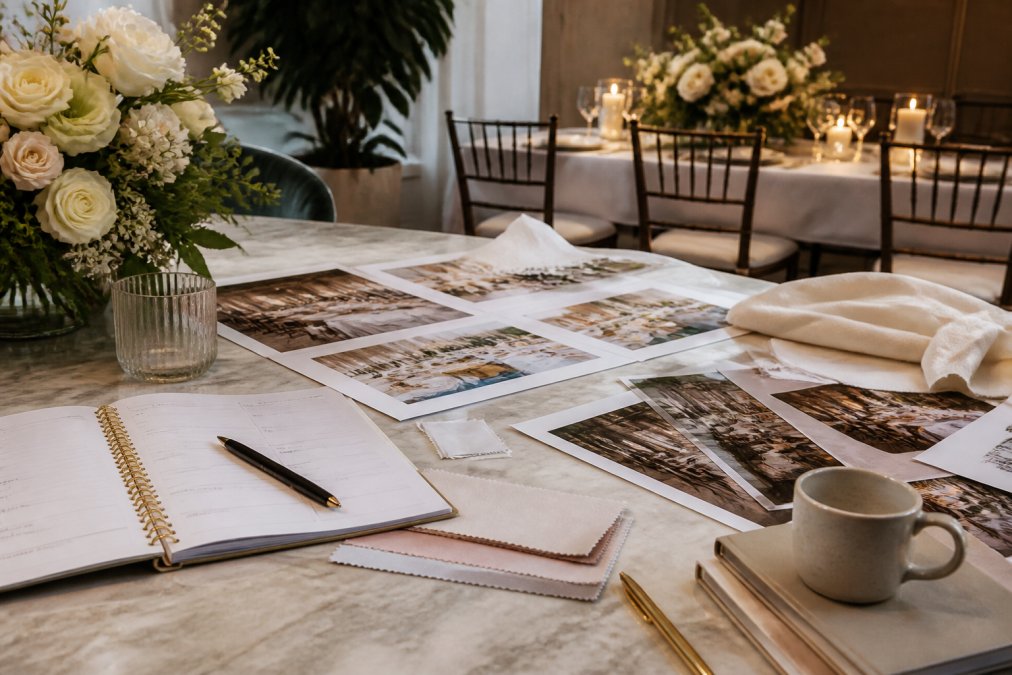
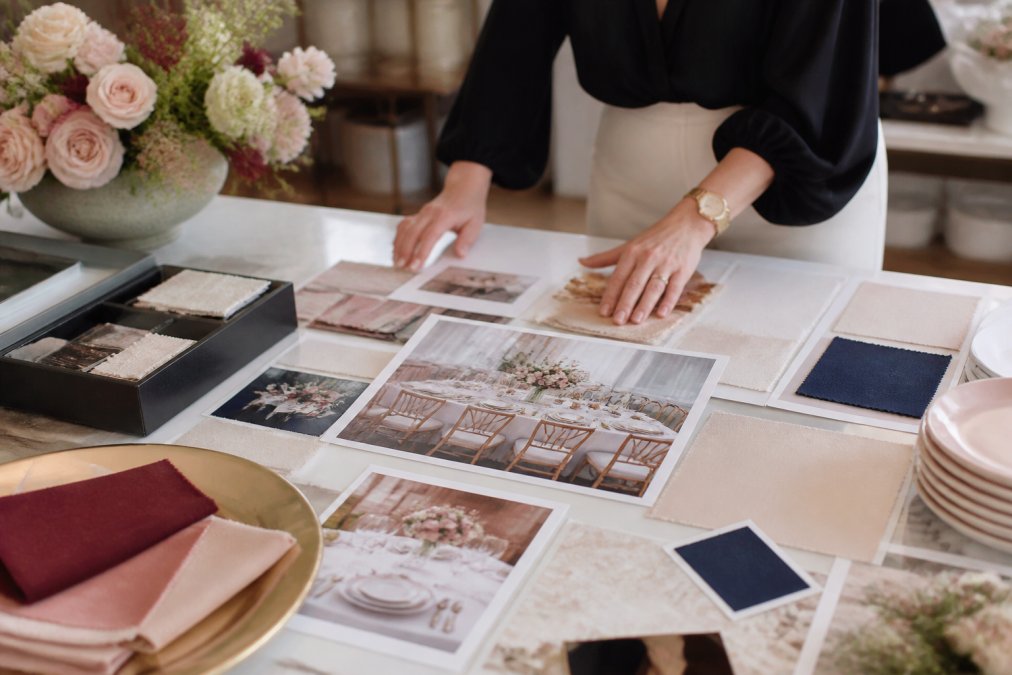
AI-powered mood board generators compress traditional mood boards into a single cohesive digital asset in minutes. ItsaYes and WeddingThemeAI both target couples in the early planning phase. ItsaYes works by selecting a style and choosing 3-5 inspiration images; the AI composes a unified mood board. WeddingThemeAI adds specificity with Pantone color matching and vendor-ready PDF exports.
The difference between these and Eventscape is scope. Eventscape generates room-scale visualizations with specific floral arrangements. ItsaYes and WeddingThemeAI generate broader aesthetic direction, useful for couples deciding between styles but less useful for florists who need stem counts and bloom types.
For planners working with couples who struggle to articulate their vision, AI mood boards accelerate alignment. Instead of three rounds of Pinterest refinement, couples can generate and react to complete visual direction in one session.
Floral Proposal Software: Automating Design and Pricing
Lobiloo AI Design Studio and Fiory.AI solve a specific florist problem: turning vague client requests into costed proposals with itemized arrangements.
Lobiloo works through conversational AI. You describe the client's preferences, budget, season, and color palette; the AI generates bouquet recipes with specific flower varieties and quantities. Lobiloo prices these recipes against your own stem costs and markup settings. Every subsequent proposal uses accurate, personalized costing.
Fiory.AI analyzes Pinterest images the client sends and reverse-engineers the floral arrangement. Upload a Pinterest board and Fiory generates flower recipes with estimated quantities, then builds a branded proposal with pricing and digital signature capability. The platform claims to reduce proposal creation time from hours to 15-30 minutes per wedding (peer-reviewed research).
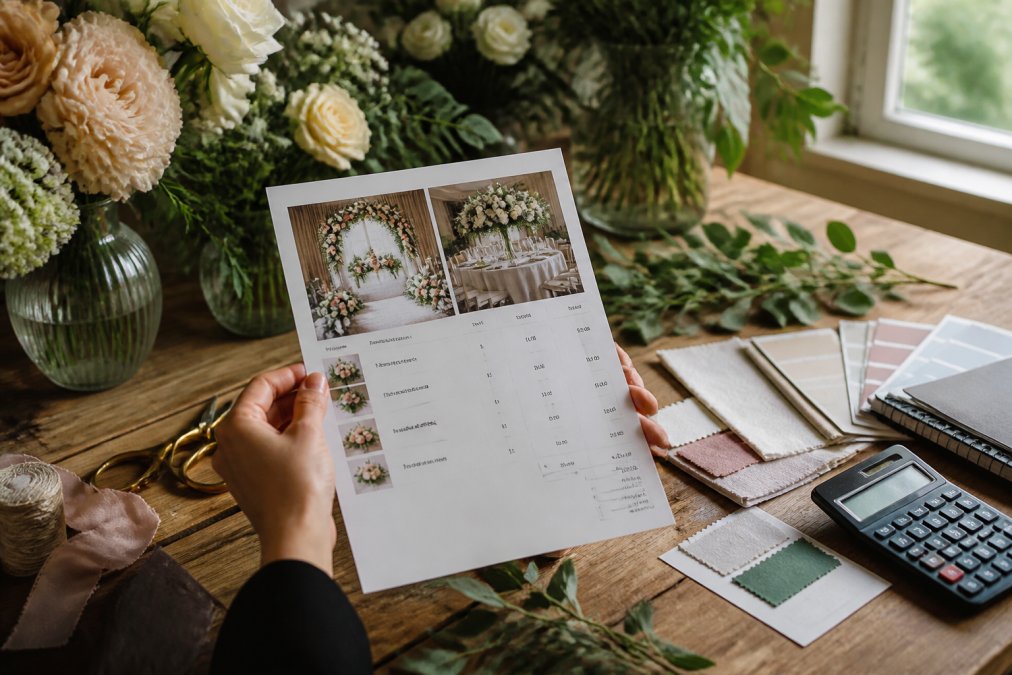
Both platforms address the core florist workflow challenge: translating client vision into concrete specifications and accurate pricing. For florists managing high client volume, multiply 15-30 minutes saved per proposal by 40-50 weddings per season, and the time savings are substantial. The catch: these tools require setup. You must build your flower library with accurate pricing and train the AI on your design preferences. A florist who processes 50+ wedding proposals annually will recoup setup time within weeks.
AI-Generated Floral Arrangements: From Concept to Client Brief
Not every florist needs a full proposal platform. Some need a faster way to generate arrangement concepts during client consultations.
flwrsAI is free and browser-based. It generates custom bouquet concepts across multiple arrangement types with 200+ flower varieties and 1,000+ design styles. For a florist sitting with a client who says "I love garden-style but with modern touches," flwrsAI can generate five variations in minutes (peer-reviewed research).
Floral AI is the mobile alternative available on iPhone. It lets you select favorite flowers and colors, and the app generates arrangement concepts. The interface is simple enough for clients to use independently.
Neither tool generates itemized briefs or integrates with pricing. But both solve a specific problem: generating visual arrangement concepts faster than sketching or describing them verbally.
Choosing the Right AI Tool: Key Evaluation Criteria
Your choice depends on where your bottleneck actually is.
If your bottleneck is client alignment on aesthetics: Eventscape or the mood board generators (ItsaYes, WeddingThemeAI) are your answer. These compress the "Does this feel right?" phase from days to hours.
If your bottleneck is proposal creation and pricing: Lobiloo or Fiory.AI are purpose-built for this. The investment in setup pays off only if you process 30+ proposals annually.
If your bottleneck is arrangement inspiration during consultation: flwrsAI or Floral AI let you generate concepts on demand with minimal setup.
If your bottleneck is overall business management: Curate tackles COGS tracking, inventory management, and rentals alongside proposals. It's built for florists running a full operation.
The critical question: What takes the most time in your current workflow? That's where AI creates the most value.
Common Pitfalls and How to Avoid Them
Pitfall 1: Treating AI visualizations as production-ready specifications. An AI-generated tablescape looks photorealistic, but the florist may interpret stem thickness or bloom density differently. Always pair visualizations with detailed written specifications. Eventscape's Designer Brief helps here.
Pitfall 2: Overestimating what AI can understand about luxury aesthetics. AI tools work best with specific, concrete language. "Art Deco meets modern minimalism with blush and sage tones" generates better results than "elegant and timeless." Use AI for concept generation, not for understanding subtext.
Pitfall 3: Letting clients think the design work is easier than it is. Clients see an AI render in minutes and assume the actual design and sourcing takes the same time. Set expectations clearly about what the tool does.
Pitfall 4: Choosing a tool based on feature count instead of workflow fit. Evaluate tools against your actual bottleneck, not against a feature checklist. A tool that solves 80% of one problem is better than a tool that solves 30% of five problems.
Pitfall 5: Assuming all AI-generated floral imagery is equally realistic. Before committing to a tool, test it with your own design language. Does the florist recognize it as achievable?
The future of wedding floral design isn't about replacing florists with AI. It's about florists using AI to compress the time spent on concept generation, mood boarding, and proposal creation, so they can spend more time on what matters: building client relationships and executing exceptional designs. Eventscape excels at visualization, compressing room-scale design concepts into photorealistic renderings that luxury clients understand immediately. For florists who want proposal automation and pricing accuracy, Lobiloo and Fiory.AI solve that problem. For those starting out, free tools like flwrsAI and the mood board generators offer low-risk entry points.
The right tool depends on your workflow, client volume, and design process. Start with the problem you're trying to solve, not the tool that sounds most impressive.
Get started with Eventscape to visualize your wedding floral concepts in photorealistic detail, complete with itemized Designer Briefs that your florist can execute with precision. In 1-3 minutes, you'll have four professional-grade perspectives of your tablescape, centerpiece, and room ambiance, ready to share with clients or vendors for immediate feedback and approval.
Frequently Asked Questions
How accurate are AI-generated floral arrangements compared to what a florist actually creates?
AI-generated floral arrangements serve as design concepts and visual direction, not production blueprints. They help clients understand color palettes, stem counts, and overall structure, but florists still exercise creative judgment during execution. The real value is alignment: when a client approves an AI-generated arrangement design, both parties understand the vision. Professional florists use these visualizations alongside their expertise to deliver arrangements that match or exceed client expectations. The tool accelerates the approval process; it doesn't replace the florist's skill.
Can AI tools handle specific design requests like 'Art Deco meets modern minimalism with a Pantone 18-1546 palette'?
Yes, modern AI floral tools can process detailed design briefs with style combinations, color specifications, and aesthetic parameters. Tools like Lobiloo AI and Fiory.AI are designed to translate specific client language, including style fusion, exact color codes, and seasonal constraints, into concrete bouquet recipes and visual concepts. The key is using precise language in your prompts. Start with your style combination, add the specific Pantone reference, mention the season and occasion, and the AI will generate options that align with those parameters. Refine from there.
What's the difference between AI tools for florists versus tools for event planners?
Florist-focused tools (Lobiloo, Fiory.AI, Curate) prioritize stem counts, pricing automation, and vendor communication. They integrate with flower inventory and generate costed proposals. Event planner tools like Eventscape generate full-room visualizations of tablescapes, centerpieces, and ambiance to help clients see the complete aesthetic. Florists use AI to design and price arrangements; planners use AI to visualize entire event environments. Many florists benefit from both: a planner tool for client mood boards and a florist tool for detailed proposal generation.
How do I position AI-generated designs to clients without devaluing my design fees?
Frame the tool as a communication accelerator, not a replacement for your expertise. Tell clients: 'This AI visualization ensures we're aligned on your vision before I source flowers and execute the design. It saves revision rounds and guarantees you get exactly what you approved.' Emphasize that the visualization is the starting point; your sourcing, arrangement technique, and real-time problem-solving during setup are where your value lies. Florists who use AI tools report stronger client confidence and fewer design disputes, which justifies your fee, not diminishes it.