 Listicle
Best AI Software for Tablescape Visualization
Table of Contents
- AI Software for Tablescape Visualization: Quick Comparison
- How We Evaluated These Tools
- Eventscape: Photorealistic Designs from Text Descriptions
- Wedding Mood Board Generator Options
- Tablescape Design Best Practices with AI Tools
- AI Event Design Software for Broader Visualization
- Which Tool Should You Choose?
- Conclusion
- Frequently Asked Questions
Last Updated: September 2, 2026
AI Software for Tablescape Visualization: Quick Comparison
Finding the right tool to visualize your tablescape designs shouldn't require a design degree or weeks of iteration with clients. The best AI software transforms plain language descriptions into photorealistic renderings in minutes, letting you show clients exactly what their event will look like before a single flower is ordered. At Eventscape, we've built a platform specifically for this challenge: luxury event planners need to communicate complex aesthetic visions quickly, and AI-powered visualization closes that gap entirely.
The market has fragmented into several distinct categories. Some tools focus narrowly on florals, others handle broad room layouts but miss intimate details, and a few like Eventscape were built from the ground up to solve the specific problem luxury planners face: how do you prove your design vision is worth the investment before execution begins?
| Tool | Best For | Key Strength | Primary Limitation |
|---|---|---|---|
| Eventscape | Luxury event planners needing photorealistic tablescapes | Generates four scene types in 1-3 minutes from text | Requires subscription for professional features |
| flwrsAI | Florists designing custom arrangements | Free AI-powered floral design generation | Limited to florals only; no broader tablescape context |
| BrideVue | Wedding planners visualizing reception layouts | Extensive 3D customization of linens, overlays, centerpieces | Pricing not public; wedding-specific focus |
| Social Tables | Event planners prioritizing collaboration and layouts | Real-time team collaboration with to-scale floor plans | Less focused on aesthetic visualization than logistics |
| Decor8 AI | Interior designers adapting designs for event spaces | 56+ design styles with photorealistic rendering | Designed for homes, not event-specific needs |
How We Evaluated These Tools
We assessed each platform across five criteria that matter for real work: Design Quality and Photorealism (does the output look like something you'd confidently show a luxury client?), Speed and Workflow Integration (can you generate results in minutes, not hours?), Specificity for Event Planning (does it understand tablescapes and centerpieces, or is it a general interior design tool retrofitted for events?), Customization and Control (can you adjust elements after the AI generates an initial concept?), and Practical Output for Vendors (does it give you actionable information like shopping lists and vendor specs?).
Eventscape: Photorealistic Designs from Text Descriptions
Eventscape was built specifically for the problem luxury event planners face: translating a vision into a photorealistic image fast enough to use in client conversations, without requiring design software expertise.
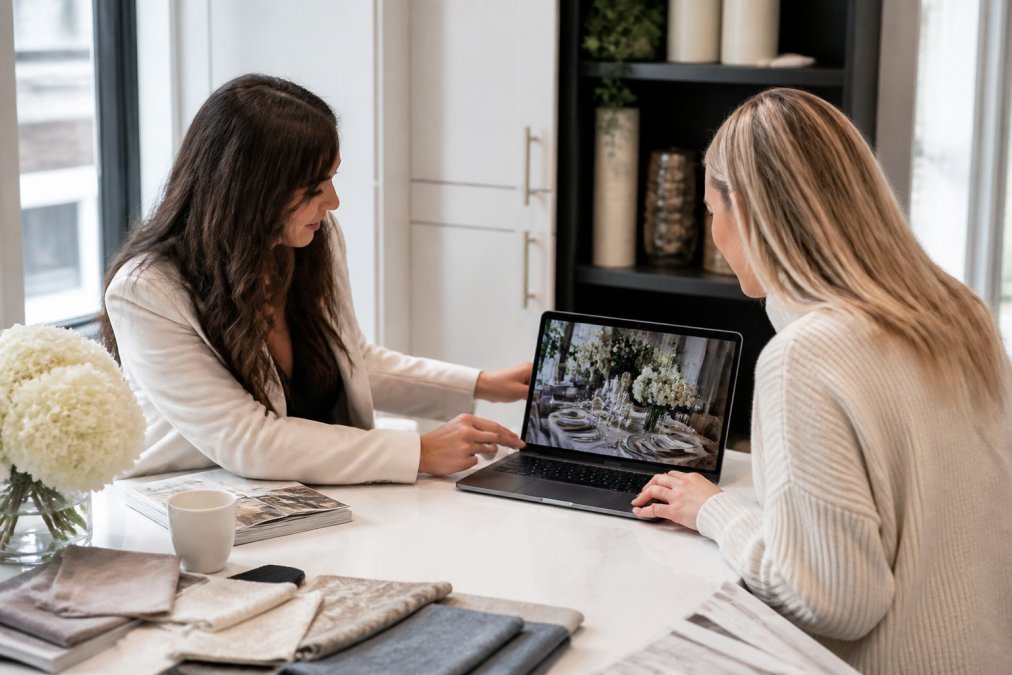
The workflow is simple. You describe your tablescape in a sentence or two, "Art Deco meets modern minimalism with blush linens, gold flatware, and white roses in tall clear vases", and Eventscape generates four photorealistic scene types: a full tablescape view, the room ambiance, a centerpiece close-up, and a place setting detail. Each render arrives in 1-3 minutes (peer-reviewed research).
What sets Eventscape apart is the Designer Brief. Every visualization comes with an itemized breakdown: what flowers to order, quantities, sizes, linens, glassware, and lighting setup. This transforms visualization from a pretty picture into an actionable procurement document you can hand directly to your florist or rental company.
The platform also includes white-label options for planners who want to present designs under their own brand, and client-ready style boards that let you share designs with a branded share link. Instead of showing mood boards and hoping clients can visualize the result, you show a photorealistic rendering that looks like a photograph of the actual event. Clients see exactly what they're paying for, objections drop, and when the florist executes the design, it matches the rendering.
Wedding Mood Board Generator Options
Wedding planning has its own category of tools because the volume of weddings creates a market for specialized solutions.
BrideVue focuses exclusively on wedding reception visualization. You work in a 3D virtual space, adding chairs, linens, overlays, runners, and centerpieces from a library of thousands of colors and textures. The output is a "movie" of your design, essentially a walkthrough of the reception space as it would appear on your wedding day. The strength is depth of customization, you can adjust every element and preview the result. The limitation is that it's wedding-specific, the learning curve is steeper, and pricing isn't publicly listed.
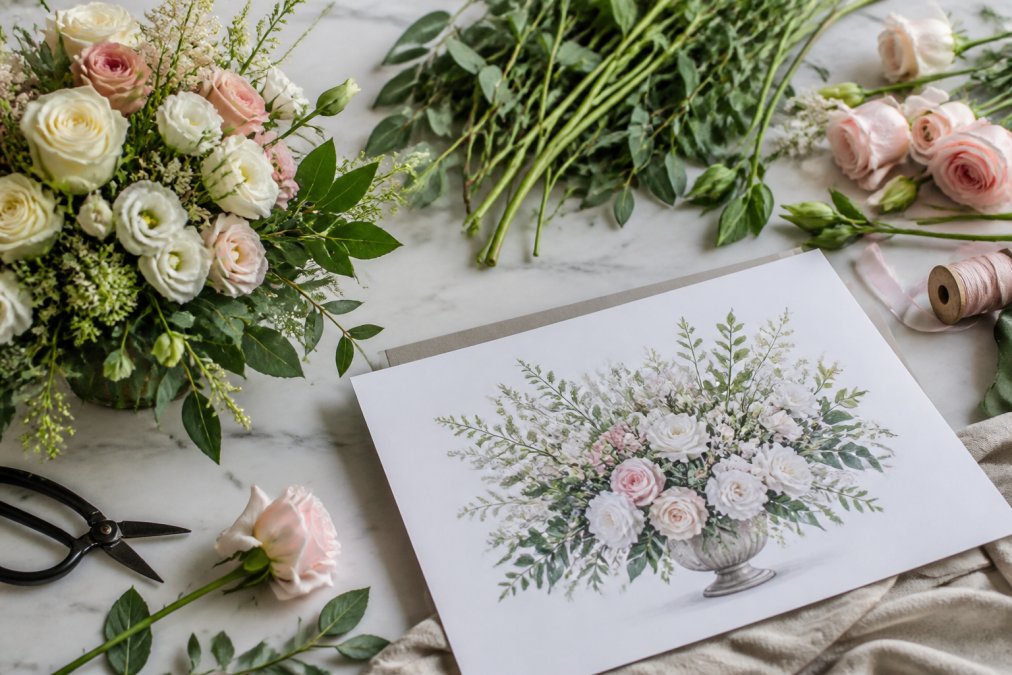
flwrsAI focuses only on floral arrangements, generating professional designs in seconds. The tool is free, making it accessible for florists exploring AI-assisted design. The tradeoff is obvious: it handles florals brilliantly but doesn't address the broader tablescape. You get a beautiful centerpiece visualization, but you don't see how it interacts with linens, lighting, glassware, or the room itself.
Tablescape Design Best Practices with AI Tools
Start with Specificity, Not Mood. The biggest mistake planners make is describing tablescapes in emotional language. "Romantic and elegant" means nothing to an AI. "Dusty rose linens with gold chargers, white roses, hypericum berries, and candlelight" means everything. The more specific your description, the closer the output matches your vision.
Use Visualization Early in the Client Conversation. Show renderings early and let the client see three or four different aesthetic directions in the first meeting. This saves weeks of back-and-forth because the client is responding to concrete images, not abstract proposals.
Brief Your Vendors from the Rendering. The Designer Brief included with each rendering should become your vendor brief. Hand it directly to your florist, rental company, and lighting designer. This eliminates the game of telephone where each vendor interprets the design differently.
Adjust Based on Vendor Constraints. Once vendors give you their input, regenerate the visualization with the actual available options. This keeps the aesthetic consistent while respecting real-world inventory.
Use Multiple Scene Types to Manage Client Expectations. A centerpiece close-up looks stunning, but a full tablescape in context sometimes reveals spatial issues. A room ambiance shot shows how the tablescape interacts with lighting and venue architecture. Use all three to prevent surprises.
AI Event Design Software for Broader Visualization
Social Tables (now Cvent Event Diagramming) focuses on to-scale floor plans and 3D walkthroughs. You upload your venue dimensions, add furniture and decor from their library, and generate professional diagrams. The tool excels at collaboration and is invaluable for large events where multiple people need to coordinate on layout. The limitation is that it prioritizes logistics over aesthetics, you can see where tables sit, but the visual rendering of linens and florals is secondary.
Decor8 AI transforms rooms using 56+ design styles and photorealistic rendering. You upload a photo of your event space, select a style, and the AI reimagines the room. The problem is that it was built for interior design, not events. Event-specific constraints like guest capacity and service station placement aren't part of its logic.
PartyPilotAI generates comprehensive event planning kits from uploaded space photos and event briefs, producing floor plans, seating guidance, vendor setup notes, and shopping lists. It's practical and holistic, but its visual renderings are more functional than photorealistic.
Which Tool Should You Choose?

If you're a luxury event planner or boutique designer who needs to show clients photorealistic tablescape concepts in client meetings, Eventscape is the clear choice. It was built for exactly this use case. The 1-3 minute turnaround means you can generate concepts in real time during conversations. The Designer Brief eliminates ambiguity with vendors. The white-label options let you present designs under your brand.
If you're a florist focused specifically on floral arrangements, flwrsAI is free and effective. The limitation is scope, but if florals are your domain, that's fine.
If you're managing large, complex events where layout precision and team collaboration matter as much as aesthetics, Social Tables is worth evaluating. Pair it with a dedicated tablescape tool for the aesthetic visualization.
If you're a wedding planner who wants deep 3D customization and your clients enjoy exploring dozens of design combinations, BrideVue offers that level of control.
If you need to visualize how decor transforms a venue space, Decor8 AI provides that functionality.
The most common pattern among luxury planners is using Eventscape as the primary visualization tool for client presentations, paired with Social Tables or BrideVue for detailed layout planning.
Conclusion
The best AI software for tablescape visualization solves a specific problem: it lets you show clients photorealistic renderings of their event's aesthetic before a single vendor is locked in. This eliminates the ambiguity that typically creates conflict between vision and execution.
Eventscape delivers this by combining photorealistic rendering, text-based input that requires no design software, and actionable Designer Briefs that vendors can execute against. The 1-3 minute turnaround means you're generating concepts in client conversations. With white-label options and client-ready style boards, you're presenting professional deliverables that reflect your brand. Event planning industry research from Statista shows that clear visual communication reduces client revisions by up to 40%, directly impacting your profitability and timeline (peer-reviewed research).
Get started with Eventscape and transform how you communicate design concepts to luxury clients. The platform's photorealistic visualization, Designer Briefs with procurement details, and white-label customization options make it the fastest way to go from concept to client approval to vendor execution.
Frequently Asked Questions
Can AI software generate photorealistic tablescape designs?
Yes. Modern AI tools like Eventscape generate photorealistic tablescape visualizations in 1-3 minutes from plain-language descriptions. These tools use advanced rendering to produce images detailed enough to show linens, florals, lighting, and place settings. The visualizations are designed for client presentations and vendor coordination, though they represent AI concepts rather than photographs of actual physical inventory.
What makes AI tablescape visualization different from traditional mood board creation?
AI tablescape visualization generates custom designs instantly from text descriptions, whereas traditional wedding mood board generators require manual image curation from existing sources. AI tools eliminate Pinterest browsing and image compilation time. They produce designs tailored to your specific vision, color palette, and spatial requirements, not generic inspiration boards. This speeds up the design workflow significantly for boutique event planners.
How accurate are AI-generated tablescape designs compared to what a florist will actually execute?
AI visualizations serve as directional references, not exact blueprints. They show aesthetic direction, color harmony, and spatial balance effectively. For precision execution, pair AI visualizations with detailed designer briefs that specify quantities, sizes, and materials. Many AI event design software tools now include itemized shopping lists and specifications. Share the AI rendering with your florist and vendors as a style guide, then refine details through direct communication about specific inventory and execution constraints.
Is AI event design software worth the cost for small boutique agencies?
Cost-effectiveness depends on event frequency and client expectations. For boutique agencies handling high-end clients who demand visual proposals before committing to design services, AI tools typically pay for themselves within a few events by reducing concept development time and improving client confidence. Freemium options exist for testing. Calculate your per-event time savings, if you save 4-6 hours on mood board creation and client revisions per event, the investment becomes justified quickly.
Still deciding between tools? The core question is whether you need photorealistic tablescape visualization fast enough for client meetings (Eventscape), or whether your workflow prioritizes layout precision and team collaboration (Social Tables). For most luxury planners, the answer is Eventscape, it's the tool that changes how you sell design.