 Listicle
Event Planning Software for Boutique Firms
Table of Contents
- Event Planning Software for Boutique Firms: Quick Comparison
- How to Choose Event Planning Software for Your Boutique
- Eventscape: AI-Powered Design for Luxury Wedding Design Software
- Aisle Planner: Comprehensive Workflow Automation for Event Design
- HoneyBook and Planning Pod: Scaling Without Breaking Budget
- Specialized Platforms: When to Go Beyond General Event Software
- Which Platform Fits Your Boutique Firm?
- Conclusion
- Frequently Asked Questions
Last Updated: August 30, 2026
Event Planning Software for Boutique Firms: Quick Comparison
Boutique event firms operate under constraints that enterprise platforms ignore. You manage multiple concurrent events with skeleton crews, work with luxury clients who demand precision, and can't justify software subscriptions that cost more than your quarterly profit. The right event planning software balances powerful features with pricing that scales to your actual volume.
This guide from Eventscape breaks down platforms that fit boutique operations, from AI-driven design tools that compress weeks of concept work into hours, to workflow automation systems that let small teams punch above their weight. We've identified tools that solve real boutique problems: client-facing portals that don't require IT support, white-labeling that feels like your own product, onboarding that takes days instead of months, and pricing that doesn't penalize you for being lean.
Quick Picks:
- Best for AI-Powered Design: Eventscape, generates photorealistic visualizations in 1-3 minutes from text descriptions (peer-reviewed research)
- Best for Comprehensive Workflows: Aisle Planner, unlimited users at every tier, covers sales through execution
- Best for Budget Scaling: HoneyBook, starts at $36/month with strong client portal and payment automation
- Best for All-in-One Features: Planning Pod, 20+ tools in one platform, unlimited users, includes floor planning
How to Choose Event Planning Software for Your Boutique
Selecting event planning software for boutique firms requires a different framework than choosing enterprise tools. Evaluate based on workflow fit, client experience, and whether the software saves time versus creating administrative overhead.
Start with your core pain point. If design concept approval is your bottleneck, prioritize visualization capabilities. If it's client management and vendor coordination, prioritize workflow automation. If it's financial tracking, prioritize budgeting and invoicing. Most boutique firms try to solve all three at once and end up with bloated software.
Next, evaluate onboarding time. You need to launch a real event within 48 hours of signup, not theoretical events. Generous free trials matter because you need to test this yourself.

Third, assess white-labeling and client-facing customization. Check whether the software allows custom branding and whether client portals can be white-labeled. Some platforms charge extra; others include it standard.
Finally, confirm pricing scales with your actual usage. Calculate the cost per event for your typical volume. If you manage 8 events per quarter, a $500/month platform costs $62.50 per event, while a $49/month platform costs $6.13 per event.
Eventscape: AI-Powered Design for Luxury Wedding Design Software
Eventscape solves a specific, high-value problem: it compresses the design concept phase from weeks to hours. Instead of spending days creating mood boards and iterating with clients, you describe your vision in a single sentence and generate photorealistic visualizations of tablescapes, florals, and room ambiance in 1-3 minutes.
This is built specifically for luxury and boutique event planners, understanding the nuance between "soft blush florals" and "garden-style roses with trailing jasmine." The photorealistic output is detailed enough to share directly with clients, florists, and rental companies, reducing revisions that typically extend timelines by weeks.
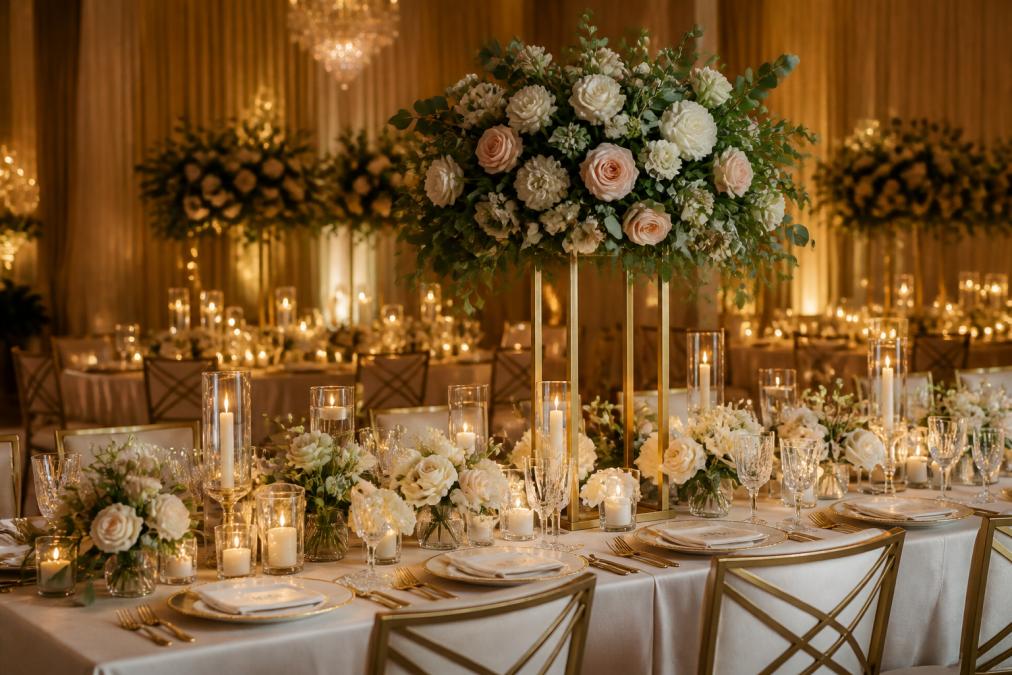
The platform includes client approval links for secure sharing and sign-off without endless email threads. Branded style boards export as PDFs with custom watermarks, so clients see your branding, not a generic AI tool.
For boutique firms juggling 8-12 concurrent events, this time compression translates directly to margin improvement, fewer revision rounds, and faster client decisions.
Aisle Planner: Comprehensive Workflow Automation for Event Design
Aisle Planner covers the full event lifecycle: lead management, proposal generation, client communication, project checklists, budgeting, vendor management, guest lists, seating, and timeline tracking.
The critical advantage for boutique firms is unlimited users at every tier. Most platforms charge per user, penalizing you for involving team members or contractors. Aisle Planner charges per active project instead, aligning with how boutique firms operate. If you have three planners managing 12 concurrent events, you're not paying for three user licenses; you're paying for active projects.
The Design Studio lets you create inspiration boards and color palettes within the platform, though it's not AI-powered like Eventscape. The platform's strength is workflow automation and client communication. You can create custom checklists tied to timelines, automate vendor reminders, and track budget status in real time. Client portals are customizable and white-labelable.
Pricing starts at $49.99/month and scales with active projects. For most boutique firms managing 8-15 concurrent events, you'll land in the $150-300/month range. You can launch a real event within a few days, though full feature adoption takes longer.
HoneyBook and Planning Pod: Scaling Without Breaking Budget
HoneyBook ($36/month starting) is a client management platform built for freelancers and creative services. It handles proposals, contracts, invoicing, and project management with a strong focus on automating administrative overhead. The client portal is professional and customizable, and it integrates with QuickBooks Online. Automations can trigger payment reminders, task assignments, and email sequences.
The limitation: HoneyBook doesn't include event-specific tools like floor planning or seating charts. It's best paired with another platform if you need those features. For boutique firms bottlenecked by client communication and payment collection, HoneyBook solves that affordably.
Planning Pod ($59/month starting) is a comprehensive all-in-one platform with 20+ tools covering event planning, business management, and venue operations. It includes floor planning and seating charts, critical for larger events. Unlimited users at every tier makes it scalable as your team grows.
The tradeoff: Planning Pod has a higher starting price and steeper learning curve. If you only need 30% of those features, you're paying for bloat. But if you need comprehensive event logistics management, the all-in-one approach saves you from juggling multiple platforms.
| Platform | Starting Price | Free Tier | Best For | Key Strength |
|---|---|---|---|---|
| HoneyBook | $36/month | 30-day trial | Client management & payment automation | Affordable admin overhead reduction |
| Planning Pod | $59/month | No free tier | Comprehensive event logistics | 20+ integrated tools, unlimited users |
| Aisle Planner | $49.99/month | 30-day trial | Wedding & event workflow automation | Unlimited users at every tier |
| Eventscape | Subscription model | Free trial available | AI-powered design visualization | 1-3 minute photorealistic concepts |
Specialized Platforms: When to Go Beyond General Event Software
Some boutique firms benefit from specialized platforms that solve one problem exceptionally well, then layer in general event management tools.
For virtual or hybrid events: Whova and Gather specialize in attendee engagement and virtual event experiences. Whova includes post-event analytics and attendee data, which matters if you're tracking ROI across multiple events.
For ticketed public events: Eventbrite is the market standard for ticketing and promotion. The per-ticket fee model (3.7% + $1.79 per paid ticket) works well for high-ticket events (eventbrite.com). For free events, Eventbrite is genuinely free.
For project management: Trello offers a visual, flexible approach to task management. The free plan includes unlimited cards and Power-Ups, which is generous for solo planners or very small teams.
For enterprise-scale events: Cvent Event Management handles large, complex events with advanced registration and on-site logistics. Custom enterprise pricing makes it overkill for most boutique firms.
The decision framework: if your boutique firm has a specialized event type, evaluate specialized platforms first. If you manage a mix of event types, choose a general platform that covers 80% of your needs and integrate specialized tools for the remaining 20%.
Which Platform Fits Your Boutique Firm?
The right event planning software depends on your primary workflow bottleneck, team size, and budget per event.
If design concept approval is your bottleneck: Start with Eventscape. Pair it with Aisle Planner or HoneyBook for workflow management. Pricing for Eventscape depends on quantity, dates, and delivery; please check the Eventscape website for current prices.
If client communication and payment collection is your bottleneck: Start with HoneyBook ($36/month). If you also need event-specific tools like floor planning, upgrade to Planning Pod ($59/month) or Aisle Planner ($49.99/month).
If you manage multiple concurrent events and need comprehensive tools: Aisle Planner ($49.99/month) is lighter-weight; Planning Pod ($59/month) includes more specialized tools. Both include unlimited users.
If you're a solo planner on a minimal budget: Start with Trello (free) for task management plus Eventbrite (free for free events) for ticketing. Add Eventscape if design visualization is important. Pricing for Eventscape depends on quantity, dates, and delivery; please check the Eventscape website for current prices.
If you host virtual or hybrid events: Layer Whova or Gather on top of your general event platform.
The common pattern: choose one general platform for workflow and client management, then add specialized tools for your specific event types. Boutique firms win by optimizing for their specific constraints, not by adopting enterprise software.
Conclusion
The boutique event planning market has fragmented into specialized solutions that fit how small teams operate. Enterprise platforms designed for 50-person planning departments create friction for boutique firms. The platforms that work recognize your constraints: limited staff, multiple concurrent events, luxury client expectations, and pricing that scales with your actual volume.
Eventscape stands out because it directly addresses the design approval bottleneck that consumes disproportionate time in luxury event planning. By generating photorealistic visualizations in 1-3 minutes, Eventscape compresses weeks of iteration into days. Pair it with Aisle Planner for comprehensive workflow automation, and you have a system built for boutique operations.
Get started with Eventscape's free trial and generate your first event design in minutes. See how photorealistic visualizations accelerate client approvals and reduce design revision cycles.
Frequently Asked Questions
Q: What features should boutique firms prioritize in event planning software?
A: Boutique firms benefit most from software that combines client-facing tools, design visualization, and workflow automation. Prioritize platforms offering client approval workflows, project timeline management, budget tracking, and vendor coordination. For design-focused boutiques, AI-powered visualization tools like Eventscape streamline concept approval. For operations-heavy firms, comprehensive suites like Aisle Planner or Planning Pod handle multiple concurrent projects. The best choice depends on whether your bottleneck is design approval speed, administrative overhead, or client communication.
Q: How does AI-powered design software benefit boutique event planners?
A: AI design platforms like Eventscape generate photorealistic visualizations in minutes, eliminating weeks of mood board assembly and vendor coordination. This accelerates client approval and reduces revision cycles. Boutique planners can pitch concepts with high-fidelity renderings before committing vendor resources, winning more pitches and reducing design rework. The trade-off: AI visualizations are concept previews, not production blueprints. Actual florals, lighting, and textures may vary. The real value is faster client buy-in and clearer vendor briefs, not replacing traditional design expertise.
Q: Is enterprise-level event software overkill for boutique firms?
A: Yes, typically. Platforms like Cvent and Whova are built for high-volume, multi-event enterprises with complex registration and attendee engagement needs. Boutique firms handling 5-15 events annually pay for unused features and face steep learning curves. Mid-market solutions like Aisle Planner or Planning Pod offer the breadth boutiques need without enterprise complexity. For design-first boutiques, specialized tools like Eventscape paired with lightweight project management (Trello) often outperform all-in-one platforms. Match your tool to event volume and primary workflow bottleneck, not brand prestige.
Q: How can event planning software help boutique firms scale their business?
A: Software scales boutique operations by automating repetitive tasks, standardizing client workflows, and enabling small teams to handle more concurrent projects. Aisle Planner's unlimited users and checklist tools let a team of two manage 20+ simultaneous events. HoneyBook's proposal and contract automation cuts administrative time by 40%. Eventscape's rapid visualization reduces design-to-approval cycles from weeks to days, freeing capacity for new clients. The key is selecting software that removes your specific bottleneck: if it's client communication, choose client-portal-first platforms; if it's design approval, choose visualization-first tools.