 how-to
How to Create Luxury Event Mood Boards
Table of Contents
- Why Luxury Event Mood Boards Are a Strategic Tool, Not Just Inspiration
- Step 1: Define the Event Purpose, Audience, and Aesthetic Direction
- Step 2: Build Your Color Palette, Texture Library, and Visual Identity
- Step 3: Curate Decor, Lighting, Florals, and Table Settings With Intention
- Building a Wedding Mood Board That Guides Every Vendor
- AI Event Design Software and Event Visualization Techniques That Raise the Standard
- How to Present Luxury Event Mood Boards to Clients
- Conclusion
Last Updated: August 25, 2026
Most guides treat a mood board as a pretty collage you hand to a client before the real work begins. That framing undersells what luxury event mood boards actually do. The difference between a board that guides a $50,000 wedding and one that collects dust in a shared folder comes down to how it was built.
Below, we'll show you exactly how to create luxury event mood boards that function as strategic design documents, from the first client conversation through final vendor briefings. This isn't a Pinterest tutorial. It's a professional workflow.
Why Luxury Event Mood Boards Are a Strategic Tool, Not Just Inspiration
A luxury event mood board is a visual design document that communicates aesthetic direction, spatial relationships, and sensory intent across every element of an event, from florals and lighting to table settings and textile choices.
Most event planners collect images. Skilled luxury planners curate a visual identity. A collection of beautiful images gives a client something to react to. A curated mood board gives every florist, lighting designer, and rental company a shared reference point, reducing the back-and-forth that erodes both margins and trust.
When a florist, lighting designer, and linen rental company work from the same visual identity document, misaligned execution drops sharply. The board becomes a design brief, a scope anchor, and a conflict-resolution tool all at once. It also demonstrates to luxury clients that you've internalized their vision, not just heard it.
Step 1: Define the Event Purpose, Audience, and Aesthetic Direction
Start here, not with images. The single most common mistake in event mood board creation is reaching for visual references before the foundational brief is solid.
Before you open any design tool, answer four questions:
- What is the event's primary purpose?
- Who is the audience, and what emotional experience should they have?
- What is the non-negotiable aesthetic direction?
- Are there any brand, cultural, or personal elements that must be honored?
These answers determine which colors belong on the palette, which textures feel right, and which design references are relevant.
Translating a Client's Vision Into a Design Concept
Most clients can tell you what they love. Few can articulate why, or how those preferences translate into cohesive event design. That translation is your job.
Ask clients to describe their ideal event in sensory terms, not visual ones. "Warm, intimate, and slightly theatrical" gives you more to work with than "I like gold and flowers." From that sensory brief, derive an aesthetic direction that guides every subsequent decision.
Document this in a one-page creative brief before building anything visual. The brief should capture the event's emotional tone, the three to five design principles that will govern all choices, and any explicit exclusions. Knowing what a client doesn't want is often more clarifying than knowing what they do.
Step 2: Build Your Color Palette, Texture Library, and Visual Identity
Color and texture are the two fastest ways to communicate luxury, and the two most commonly mishandled elements in event design mood boards. A refined color palette defines relationships between colors, specifies how they interact across surfaces, and establishes hierarchy.
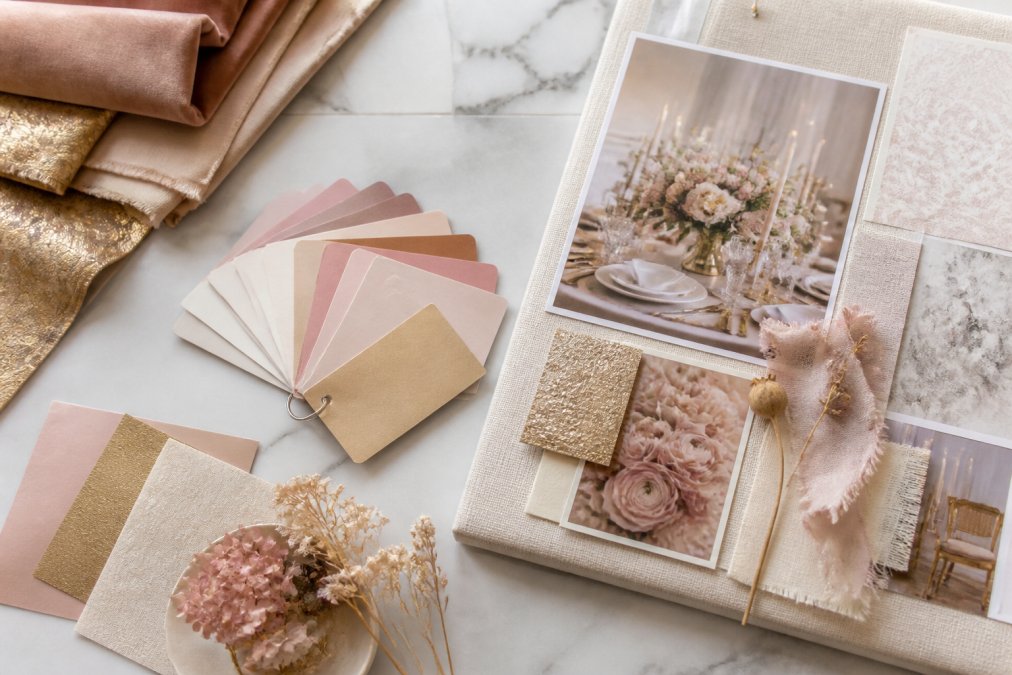
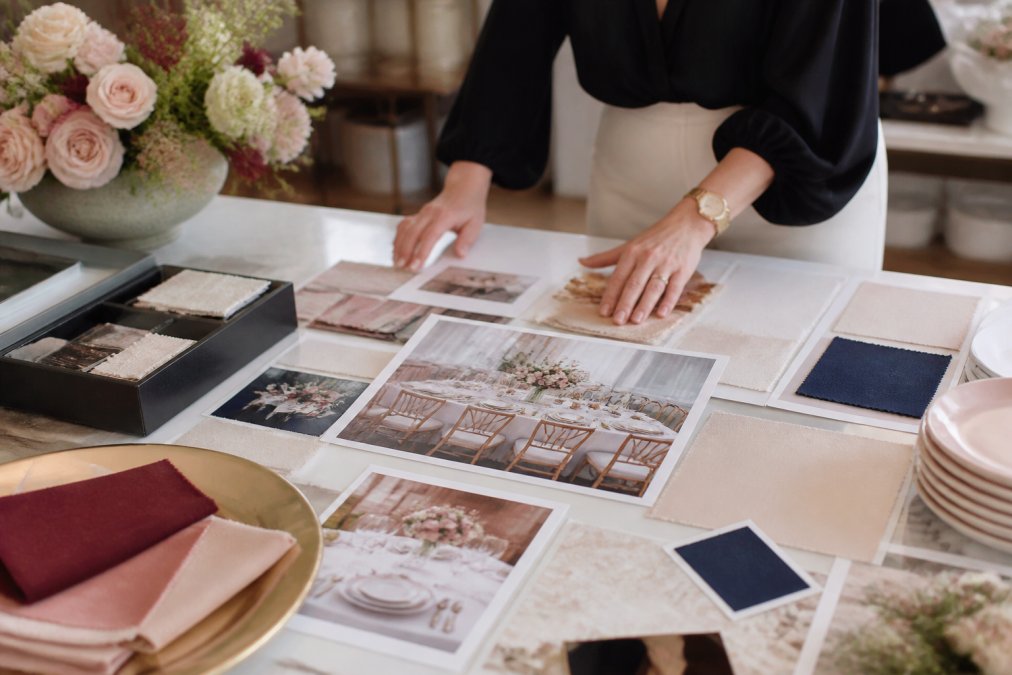
For a high-end event, a working color palette typically includes a dominant color, a secondary color, an accent, and a neutral. Four colors, precisely specified. Not a mood. Actual values that a florist can match, a lighting designer can reference, and a linen supplier can source against.
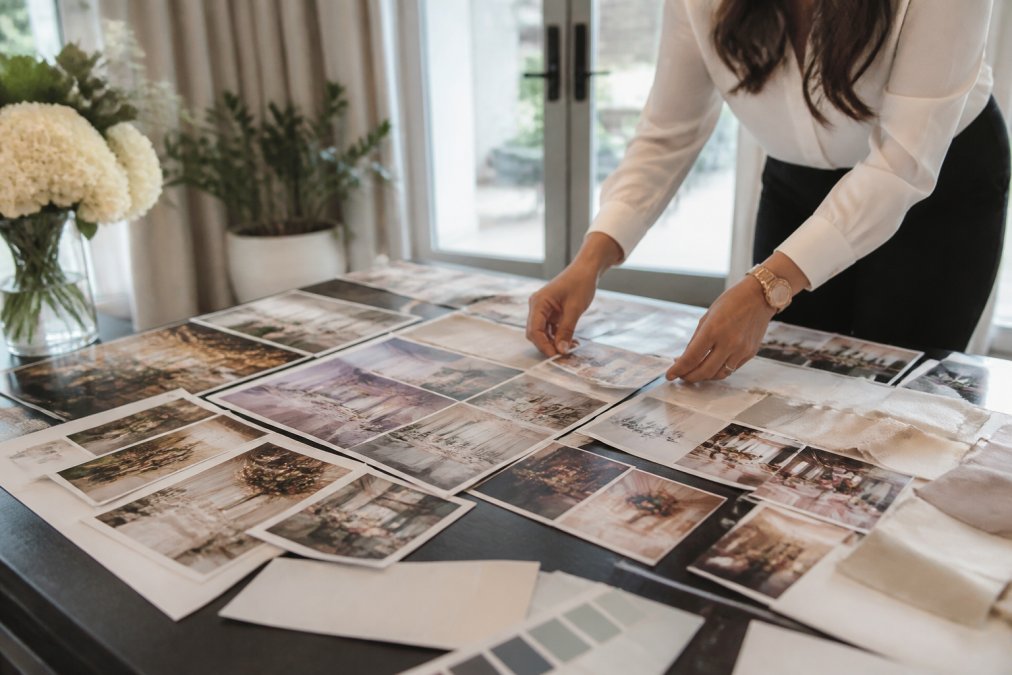
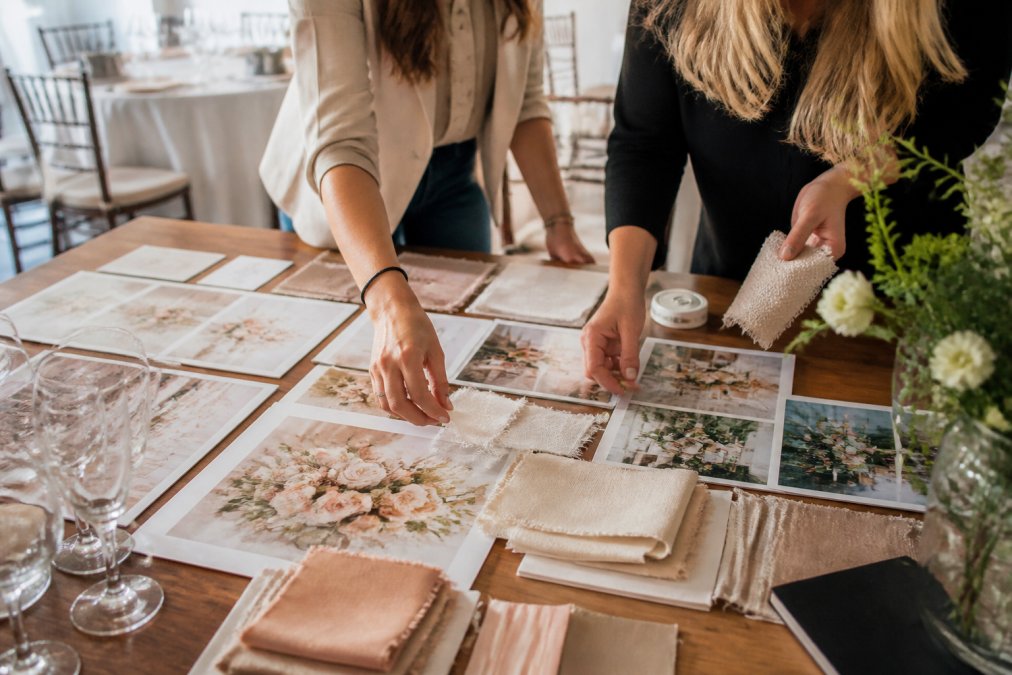
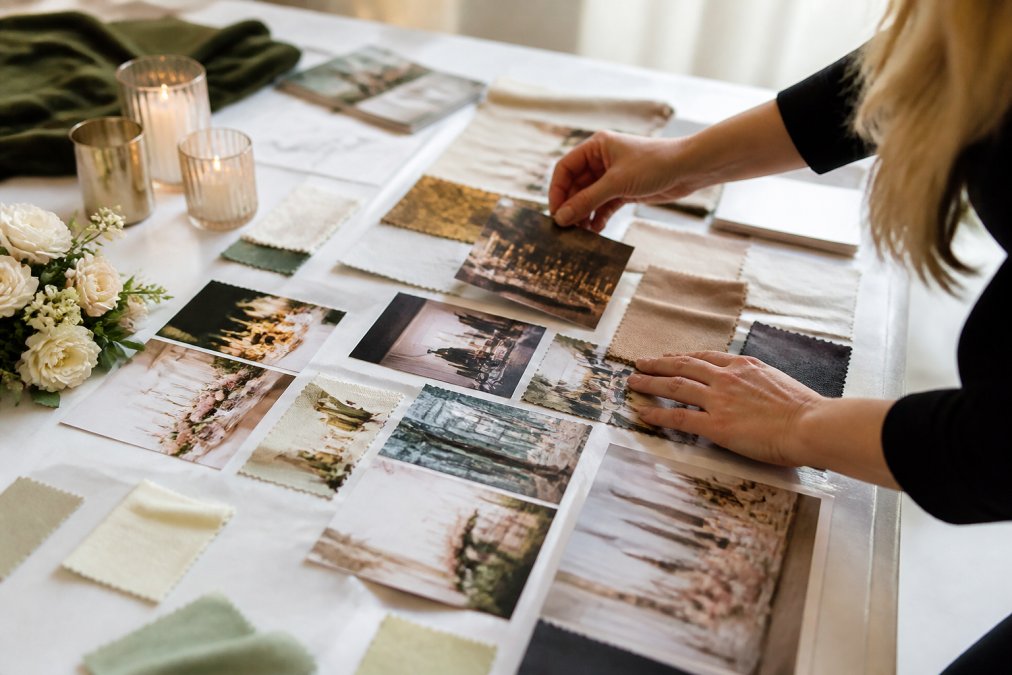
Your texture library should be equally deliberate. Luxury events are sensory experiences, and texture is the element guests feel before they consciously register it. The weight of a linen napkin, the sheen of a lacquered centerpiece, the roughness of a slate place card holder. These choices should appear on your board as physical swatches or high-resolution material references.
The Psychology of Color and Texture in High-End Events
Color psychology in luxury event design operates differently than in general marketing contexts. According to Color research published by the American Psychological Association, color associations are culturally mediated and context-dependent, which means a color that signals opulence in one setting reads as cold in another.
Your palette choices should be calibrated to the event's cultural context, the time of day, and the lighting conditions of the venue. Warm ivory under candlelight reads entirely differently than the same ivory under fluorescent overheads. Deep jewel tones that feel rich in a high-ceilinged ballroom can feel oppressive in a low-ceiling private dining room.
Step 3: Curate Decor, Lighting, Florals, and Table Settings With Intention
Curation is not collection. Every image on a high-end event board should earn its place by answering a specific design question. A floral reference should specify height, density, color family, and structural style. A lighting reference should indicate directionality, color temperature, and the emotional atmosphere it creates. A table setting reference should communicate the relationship between tableware, linen, and centerpiece scale.
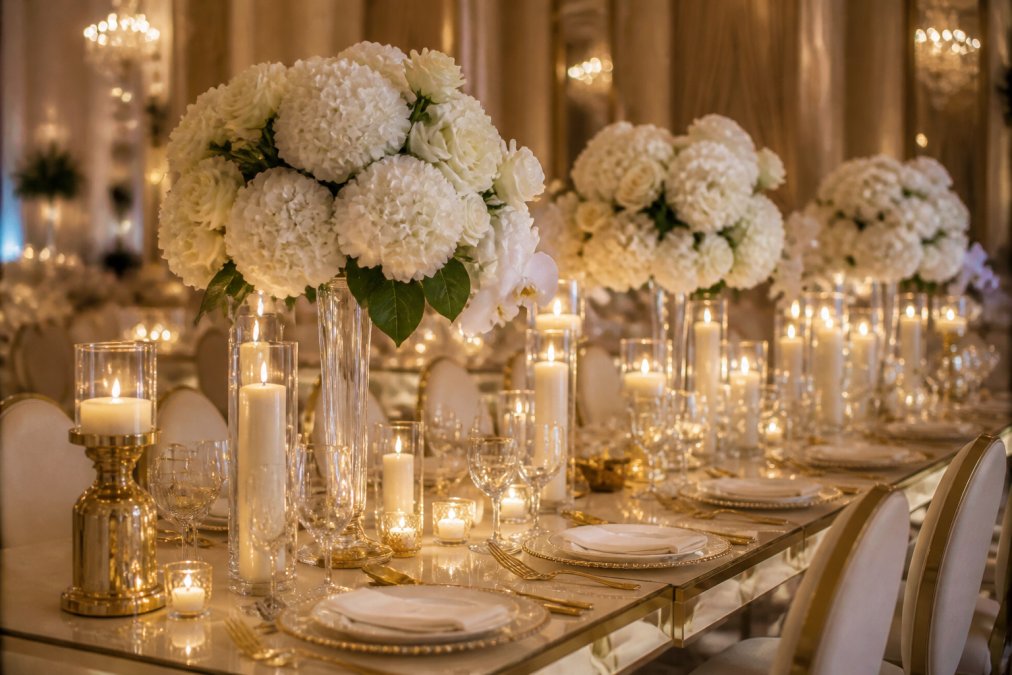
The most effective luxury event mood boards organize elements by spatial layer: overhead elements, eye-level elements, table-level elements, and floor-level elements. This spatial planning approach forces you to think about how the design reads from multiple vantage points.
For table settings, include references for each component separately: charger plates, napkin fold and material, glassware silhouette, cutlery finish, and place card treatment. Vendors who receive this level of detail produce work that coheres.
| Board Element | What to Specify | Common Omission |
|---|---|---|
| Florals | Height, density, color family, structural style | Scale relative to table size |
| Lighting | Color temperature, directionality, atmosphere | Interaction with venue surfaces |
| Table settings | Each component separately | Napkin material and fold |
| Decor | Finish, scale, spatial layer | Floor-level elements |
| Textiles | Weight, sheen, drape | How they read under event lighting |
Building a Wedding Mood Board That Guides Every Vendor
A wedding mood board functions as the design constitution for the entire event. Every vendor decision, from the cake design to the ceremony backdrop, should trace back to it.
The most effective wedding mood board structure separates the event into distinct zones: ceremony, cocktail hour, reception, and any ancillary spaces. Each zone gets its own visual reference cluster while maintaining cohesion through the shared color palette and visual identity.
According to The Wedding Report's industry research, weddings involve an average of eight to twelve vendors. Each will interpret your design direction through their own aesthetic lens unless you give them a precise reference. A wedding mood board that guides every vendor leaves no room for interpretation on the non-negotiables while allowing creative latitude on execution.
Vendor Communication Workflows: From Board to Brief
The board is the starting point, not the deliverable. The real workflow happens when you translate board elements into vendor-specific briefs.
For each primary vendor, extract the relevant sections of the mood board and annotate them with specific requirements. A florist brief should include approved color references with hex codes or Pantone values, structural references for each arrangement type, scale guidance relative to table dimensions, and explicit exclusions.
A lighting brief should specify the color temperature range for each event phase, any specific effects required, the venue surfaces that need to be illuminated or avoided, and the emotional transition points across the event timeline.
AI Event Design Software and Event Visualization Techniques That Raise the Standard
The most significant shift in luxury event mood board creation is the availability of AI event design software that generates photorealistic visualizations from text descriptions. Instead of assembling reference images that approximate your vision, you can generate images that show exactly what your design concept will look like in context.
Eventscape is built specifically for this use case. By describing a tablescape, floral arrangement, or room ambiance in a single sentence, planners can generate photorealistic visualizations in one to three minutes. For luxury and boutique event planners, this means client proposals can include renders of the actual design, not just inspiration references, before a single item is ordered or a single vendor is briefed.
Event Visualization Techniques: Digital Boards vs. Photorealistic Renders
Event visualization techniques fall into two broad categories: digital collage boards and photorealistic renders. Each has a distinct role in the planning workflow.
Digital collage boards, assembled in tools like Canva or dedicated mood board platforms, are fast to produce and effective for early-stage client alignment. They communicate aesthetic direction and emotional tone without making specific commitments about execution.
Photorealistic renders, generated through AI event design software, serve a different purpose. They're most valuable once the design direction is locked and you need to communicate specific execution details to clients and vendors. A render showing the exact centerpiece height, the precise color of the linen, and the quality of the candlelight eliminates ambiguity.
The most sophisticated luxury event planners use both. A collage board to establish direction. A photorealistic render to confirm execution. As noted in Harvard Business Review's research on visual communication in professional services, visual specificity in client presentations significantly reduces revision cycles and increases perceived professionalism.
Budget-Conscious Luxury: Scaling the Approach for Smaller Events
Luxury aesthetic direction doesn't require a luxury budget. The discipline of the mood board process, the specificity of the color palette, and the intentionality of the texture library are methodological choices, not financial ones.
For smaller events, concentrate investment in the elements guests interact with directly: the table setting, the lighting quality, and the floral centerpieces. Use the mood board to identify where a lower-cost material or approach can achieve the same visual effect as a premium one.
AI visualization tools make this analysis concrete. You can generate renders of multiple approaches at different price points and compare them visually before committing to any expenditure.
How to Present Luxury Event Mood Boards to Clients
Presentation context shapes how clients receive a mood board. The most effective presentation structure follows this sequence:
- Restate the brief in one or two sentences before showing anything visual.
- Introduce the design concept as a narrative. Name the aesthetic direction, describe the sensory experience you're creating, and explain the two or three design principles that govern every choice.
- Walk through the board by zone, not by element type. Show the ceremony section, then cocktail hour, then reception.
- Invite specific feedback. Ask "Does this color palette feel right for the ceremony?" rather than "What do you think?"
- Confirm the non-negotiables before closing. Identify the two or three elements the client responded to most strongly and confirm they're locked.
According to ILEA (International Live Events Association) professional resources, structured client presentations with visual documentation significantly reduce miscommunication and post-event disputes.
For planners using photorealistic visualization tools, the presentation gains an additional layer of credibility. Showing a client a render of their actual tablescape communicates a level of design precision that reference images can't match.
Building luxury event mood boards that actually guide execution requires more discipline than most planners invest in the process. The challenge isn't creativity. It's specificity: translating a client's vision into a visual document precise enough that every vendor interprets it the same way. Eventscape's AI-powered visualization platform addresses this directly. By generating photorealistic renders of tablescapes, florals, and room ambiance from a single text prompt, in one to three minutes, it gives planners a tool that moves the mood board from inspiration to execution-ready brief. Get started with Eventscape and show clients exactly what their event will look like before a single decision is finalized.
Frequently Asked Questions
Q: What elements are essential for a high-end event mood board?
A: A high-end event mood board should include a defined color palette, texture and material swatches, lighting references, floral and centerpiece imagery, table setting examples, and typography samples. Beyond the visuals, it needs a clear narrative, a statement of the sensory experience you're creating. The difference between a basic board and a luxury design presentation is cohesion: every element should reinforce the same aesthetic direction rather than sitting as a loose collection of pretty images.
Q: Can AI create a mood board for events?
A: Yes. AI event design software can generate photorealistic visualizations of tablescapes, floral arrangements, and room ambiance from a short text description. Platforms built specifically for luxury event planners, like Eventscape, produce renders in minutes rather than hours. This is a step beyond a traditional mood board, instead of curated reference images, clients see a photorealistic mockup of their actual event aesthetic, which significantly reduces back-and-forth during the approval process.
Q: What programs do professional designers use to create luxury mood boards?
A: Professional event designers typically use a combination of tools: presentation software for layout and composition, digital curation platforms for collecting inspiration, and increasingly, AI-powered visualization tools for photorealistic renders. The most effective workflow pairs a curated mood board with a rendered visualization, the board communicates the concept, while the render shows the client exactly what the finished space will look like. For luxury and boutique planners, AI render tools are becoming the standard for client proposals.
Q: How do you translate a client's vision into a cohesive aesthetic theme?
A: Start with a discovery conversation focused on feelings, not just colors, ask how they want guests to feel when they walk in. Then identify two or three anchor references (a texture, an era, a specific atmosphere) and build every design decision around those anchors. Once the concept is defined, test cohesion by asking whether each decor element, lighting choice, and floral arrangement reinforces the same mood. Anything that doesn't serve the central vision gets cut, regardless of how beautiful it is on its own.
This article was written using GrandRanker